
What Does 'Orthodontist Approved' Actually Mean?
Walk down any pharmacy aisle and you will find a toothpaste claiming to be "dentist recommended" or "professionally approved." But what does that label actually commit the manufacturer to — and how do you tell the difference between a meaningful professional endorsement and a marketing stamp?
Most consumers never ask the question. They see a credential claim on packaging and assume it signals safety and effectiveness. As the formulating scientist behind DENT-TASTIC, I think you deserve a clearer answer — one that explains what a genuine professional evaluation looks like, and what it does not.
Why "Approved" Claims Are Not All Equal
In most markets — including Hong Kong — the term "orthodontist approved" is not a regulated designation. There is no licensing body that audits which products can and cannot display the phrase. A company could technically print it on packaging after a single dentist expresses a positive opinion, with no requirement for formal testing, written evaluation, or conflict-of-interest disclosure.
This is not cynical speculation. It reflects how oral care marketing has operated for decades. The American Dental Association's Seal of Acceptance is one of the few verifiable third-party marks in the industry — but even that seal evaluates products against specific safety and efficacy criteria, not against the full complexity of how a formulation interacts with the oral microbiome.
So what does a genuine professional endorsement look like? It rests on at least three pillars: the credentials of the reviewing clinician, the specificity of the evaluation criteria, and the scientific basis of the formulation itself.
What Orthodontists Actually Evaluate
Orthodontists are specialists in the structural mechanics of the mouth — teeth, jaws, bites, and the tissues that support them. Their professional scope goes well beyond general cavity prevention. When a specialist with that training reviews a toothpaste, they are assessing it against criteria that most consumers and general practitioners have not thought to apply.
The questions a rigorous orthodontic evaluation asks include:
Is it safe for enamel? Toothpastes with high relative dentin abrasivity (RDA) scores can accelerate enamel erosion over time. A formulation intended for daily use should sit comfortably within safe abrasivity ranges, particularly for patients wearing orthodontic appliances where enamel around brackets is already under mechanical stress.
Does it support gum tissue health without causing irritation? Sodium lauryl sulfate (SLS), a foaming agent in most conventional toothpastes, has been linked in several studies to increased frequency and severity of aphthous ulcers (canker sores).1 Patients undergoing orthodontic treatment — with brackets, wires, and retainers creating additional friction points — are particularly vulnerable to soft-tissue irritation. A formulation that omits SLS removes one significant source of recurrent mouth soreness.
Does it avoid antimicrobial blunt instruments? Triclosan, historically added to toothpastes as a broad-spectrum antibacterial agent, disrupts the oral microbiome without discrimination — eliminating beneficial bacteria alongside harmful ones. The science of oral health has moved toward selective modulation of bacterial populations rather than wholesale elimination.
Is there a scientifically documented mechanism, not just a marketing claim? This last question is the most important, and it is where most "approved" claims fall apart. A product can be safe and non-irritating — meeting those first criteria — while still offering no documented mechanism of action for its core claims.
The Science Behind a Formulation-Based Endorsement
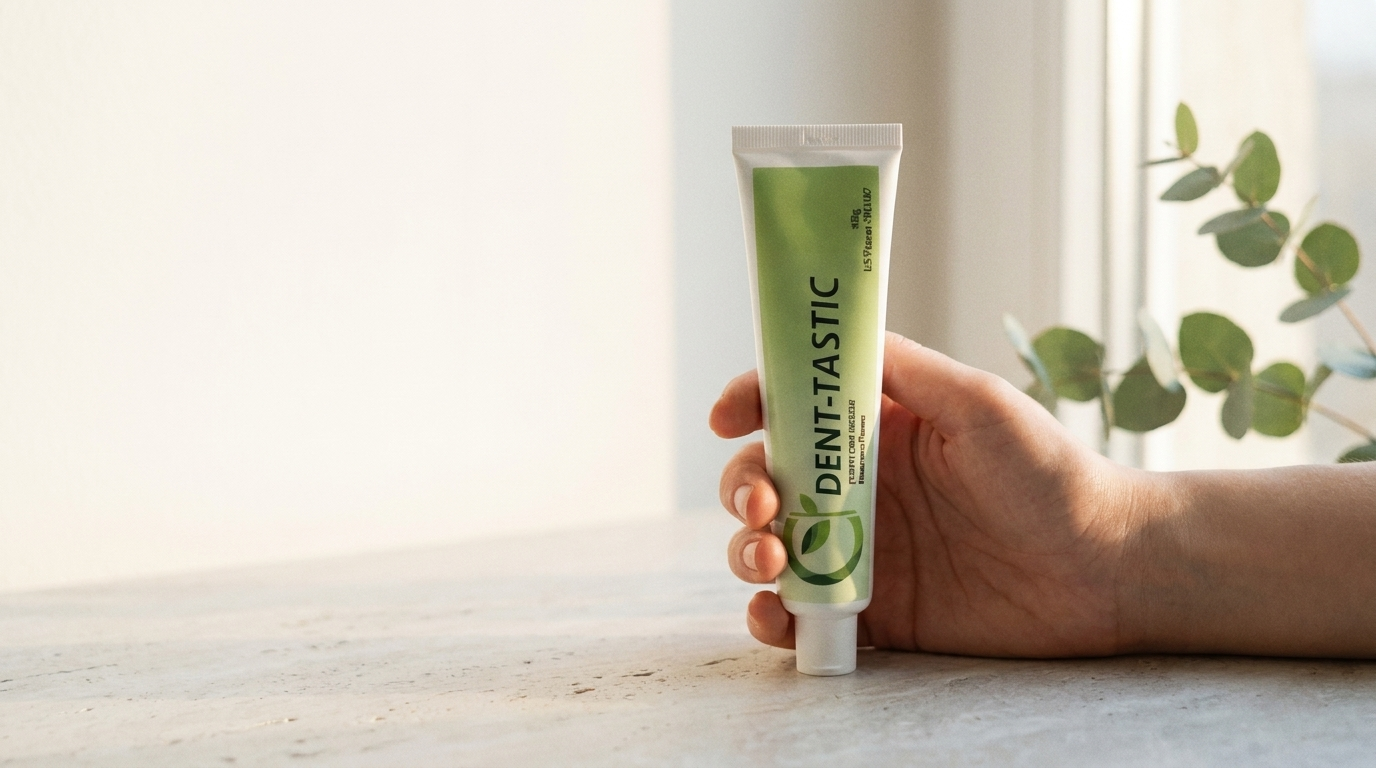
DENT-TASTIC Fresh Mint Toothpaste was not submitted to an independent review panel for a certificate stamp. It was developed by a scientist whose academic career has been built on understanding the relationship between oral microbiology, tissue response, and structural dental health.
I am Professor Bakr Rabie, Professor of Orthodontics, University of Hong Kong, a Northwestern University graduate with a PhD in Molecular Biology. My research career has focused on the biological mechanisms underlying orthodontic treatment outcomes and the role of the oral microbiome in long-term dental health. DENT-TASTIC was developed not as a cosmetic product that happens to mention science on the label, but as a formulation grounded in peer-reviewed research.
The active ingredient mechanism in DENT-TASTIC is protected under US Patent 7943187. The two natural active ingredients — Paeoniflorin and Quercetin — were selected based on their independently documented effects on oral microbiology and tissue health.
Quercetin, a plant-derived flavonoid found in many fruits and vegetables, has been studied extensively for its effects on periodontal pathogens. A 2021 study published in Frontiers in Microbiology demonstrated that quercetin supplementation promotes balanced periodontal tissue homeostasis by limiting inflammation and fostering an oral environment with healthier microbial composition, including reduction in pathogenic species.2 Separate research in Scientific Reports confirmed that quercetin inhibits virulence properties of Porphyromonas gingivalis — the bacterium most consistently implicated in periodontal disease progression.3
Paeoniflorin, a monoterpene glycoside derived from paeony root, has demonstrated statistically significant effects on alveolar bone preservation and soft-tissue protection in experimental periodontitis models. A study in Archives of Oral Biology found that paeoniflorin significantly down-regulates inflammatory infiltration and prevents alveolar bone loss and soft-tissue destruction.4
Neither ingredient appears in a conventional fluoride-only toothpaste. Their combined presence in a single, SLS-free, triclosan-free formulation reflects a deliberate scientific decision — not a marketing one.
Ready to experience the difference? DENT-TASTIC Fresh Mint Toothpaste is formulated with patented natural active ingredients — Paeoniflorin and Quercetin — by a Professor of Orthodontics. Shop now — HK$48.00 →
The Three-Level Credential Stack
There is a useful way to think about what genuine professional authority looks like in oral care. It operates on three levels — and most "approved" products only reach the first.
The credential stack for oral care endorsements. Labels rendered as SVG text.
Level 1 — Safety credentials: The formulation has been assessed for RDA (abrasivity), pH safety, absence of known irritants (SLS, triclosan, parabens), and ingredient-grade purity. This is the baseline — necessary but not sufficient.
Level 2 — Efficacy credentials: The active ingredients have peer-reviewed scientific literature supporting their mechanism of action. This means real study citations — PubMed IDs, institution-affiliated authors, peer-reviewed publication — not in-house claims.
Level 3 — Formulator credentials: The scientist who designed the formulation has relevant academic credentials and a track record in the field. A PhD in Molecular Biology combined with a research focus on orthodontics and oral microbiology is directly relevant to formulating a toothpaste whose claims concern bacterial modulation and tissue health.
Most "professionally approved" toothpastes reach Level 1. Some reach Level 2 for individual ingredients. Very few have a named formulator operating at Level 3. DENT-TASTIC is built on all three.
The DENT-TASTIC Standard
When DENT-TASTIC says "formulated by a PhD orthodontics professor," the claim is specific and verifiable. It refers to a named scientist with documented academic history, a protected patent number, and ingredient selections that trace directly to peer-reviewed research.
That is a different kind of endorsement than a stamp of approval from an unnamed professional or a seal earned by meeting minimum safety thresholds. It is a claim about the thinking process that produced the formulation — and the scientific literature that supports it.
For the full science behind the active ingredients, see the Ingredients page →
Ready to try the difference? DENT-TASTIC Fresh Mint Toothpaste — SLS-free, triclosan-free, patented natural active ingredients. Shop now — HK$48.00 →
Key Takeaways
- "Orthodontist approved" is not a regulated phrase — its value depends entirely on the credentials behind it and the criteria applied.
- A meaningful professional evaluation assesses enamel safety, gum tissue compatibility, absence of irritants, and a documented scientific mechanism.
- DENT-TASTIC was developed by a named scientist — Professor Bakr Rabie — with a PhD in Molecular Biology and specialist expertise in orthodontics.
- The active ingredients (Quercetin and Paeoniflorin) are covered by US Patent 7943187 and selected based on peer-reviewed research into periodontal bacteria.
- SLS-free and triclosan-free formulation removes two common sources of mucosal irritation relevant to orthodontic patients.
Frequently Asked Questions
What does "orthodontist approved" mean on toothpaste?
In most markets, the phrase is not a regulated designation — no single authority controls who can use it. A meaningful orthodontist approval involves a credentialled specialist evaluating the formulation against specific criteria: enamel safety, gum tissue compatibility, absence of known irritants, and a documented scientific mechanism of action. A marketing stamp from an unnamed source meets none of those criteria.
Is DENT-TASTIC suitable for people wearing braces?
DENT-TASTIC is SLS-free and triclosan-free, which addresses two common sources of soft-tissue irritation relevant to orthodontic patients. Its active ingredients have been studied for effects on the bacteria associated with plaque buildup around brackets. We recommend consulting your own orthodontist about the right care routine for your treatment.
What is US Patent 7943187?
US Patent 7943187 covers the active ingredient mechanism in DENT-TASTIC Fresh Mint Toothpaste — specifically the combination of Quercetin and Paeoniflorin as natural active ingredients targeting harmful oral bacteria. The patent is publicly searchable through the US Patent and Trademark Office database.
Does DENT-TASTIC contain fluoride?
DENT-TASTIC Fresh Mint Toothpaste contains fluoride as a standard enamel-protective mineral. Its SLS-free and triclosan-free designation refers to detergent and broad-spectrum antimicrobial agents, not to fluoride. We recommend checking the current ingredient list on the product packaging for the most up-to-date formulation details.
What is the difference between "dentist recommended" and "orthodontist formulated"?
"Dentist recommended" typically means a dentist (or a panel of dentists) has expressed support for the product — which may or may not involve reviewing the formulation in detail. "Orthodontist formulated" — or more precisely in the case of DENT-TASTIC, formulated by a Professor of Orthodontics with a PhD in Molecular Biology — means the scientist who designed the formula has specialist credentials in the field the product addresses.
References
- Shim YJ, et al. "Effect of sodium lauryl sulfate on recurrent aphthous stomatitis: a randomized controlled clinical trial." Oral Diseases. 2012. PubMed 30839136 ↩
- Dodington DW, et al. "Quercetin Preserves Oral Cavity Health by Mitigating Inflammation and Microbial Dysbiosis." Frontiers in Microbiology. 2021. PMC8663773 ↩
- Zhao L, et al. "Quercetin inhibits virulence properties of Porphyromonas gingivalis in periodontal disease." Scientific Reports. 2020. Nature.com ↩
- Guimarães MR, et al. "Protective effects of paeoniflorin on alveolar bone resorption and soft-tissue breakdown in experimental periodontitis." Archives of Oral Biology. 2015. PubMed 26179445 ↩
About the author
Professor Bakr Rabie is Professor of Orthodontics, University of Hong Kong and a Northwestern University graduate with a PhD in Molecular Biology. A globally published, award-winning scientist specialising in orthodontics, he co-founded DENT-TASTIC with his son Adam Rabie to bring research-backed oral care to consumers. Meet the founders →
Continue reading
Oral Systemic Health Connection: What Your Gums Reveal
Research has explored the oral systemic health connection between gum disease and cardiovascular, metabolic, and other conditions. Here's what the science actually says.
Read More →Paeoniflorin & Quercetin Toothpaste: The Science Explained
Paeoniflorin and Quercetin are DENT-TASTIC's patented active ingredients. Here's the peer-reviewed science behind how they work — and how they compare to conventional toothpaste.
Read More →SLS-Free Toothpaste Benefits: Who Actually Needs It?
SLS-free toothpaste benefits are real — but for whom? We look at the peer-reviewed evidence on SLS, canker sores, dry mouth, and who should consider switching.
Read More →Ready to make the switch?
Try DENT-TASTIC Fresh Mint Toothpaste — formulated with patented natural active ingredients Quercetin and Paeoniflorin.
Shop Now